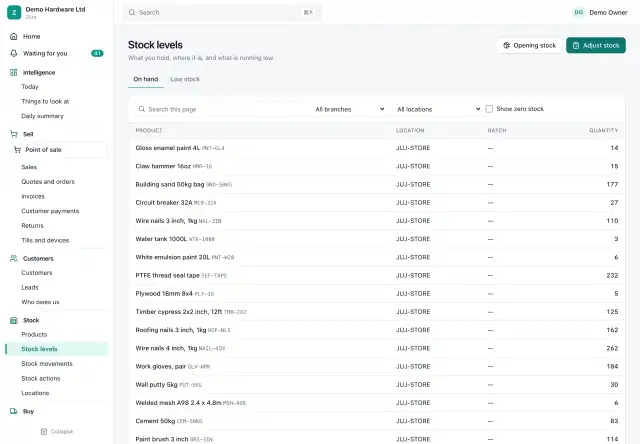
How stock is kept
- One stock ledger: movements cannot be edited or deleted, the database refuses it. Corrections are new movements.
- Balances are locked while a movement is posted, so two tills cannot both take the last item.
- Weighted average cost, so margins and stock value are calculated from what you actually paid.
- Locations within a branch, opening stock, and reorder levels.
- Only the inventory service changes stock: sales, returns and goods received publish events instead.
Moving and correcting stock
- Transfers between branches go through an in-transit step: sent, then received, so goods cannot vanish between shops.
- Adjustments need a reason and, above the limit you set, an approval.
- Stock counts compare the count with the system and show variances; a variance threshold is a company setting.
- Batches and expiry can be tracked on products that need them.
The web screens for batch lookup are still limited: batch-tracked products cannot yet be adjusted or transferred from the screens.
Costs are protected
Costs are shown only to people who hold the stock-cost permission. A cashier sells a product without seeing what it cost.
Shrinkage you can see
Stock that goes missing without a sale is the commonest leak in retail. Because every movement is linked to its cause, Intelligence can flag stock that disappears without a matching sale, odd-hour adjustments and negative stock. Read how to detect stock shrinkage.
Frequently asked questions
Can stock go negative?
That is a company policy you choose. The ledger enforces it when a movement is posted.
Does it support barcodes?
Products carry barcodes, and the till looks them up when you scan.